
As temperatures begin to drop, homeowners often shift their attention from cooling their homes to keeping them warm. However, preparing your air conditioning system for winter is an important part of seasonal home maintenance. Taking the right steps before cold weather arrives can help protect outdoor components, reduce unnecessary wear, and make it easier to restore cooling when warmer temperatures return. An HVAC contractor can recommend practical ways to prepare your AC for the off-season while helping you identify maintenance concerns that should be addressed before winter begins.
Clean Your AC Unit and Inspect Its Components
One of the first steps in preparing your air conditioner for winter is cleaning the outdoor condenser unit. Throughout the summer, leaves, grass clippings, dirt, and other debris can collect around the equipment.
These materials can obstruct airflow, trap moisture, and contribute to corrosion if left in place. Before temperatures fall significantly, remove loose debris from around the unit and clear vegetation that has grown too close to its sides.
You should also inspect the exterior cabinet for visible signs of damage. Bent fins, loose panels, rust, and damaged wiring covers may indicate problems that need professional attention. Although homeowners can safely remove surface debris, they should avoid opening electrical compartments or attempting repairs without the appropriate training. If you notice unusual damage, contact a qualified technician to determine whether maintenance or repairs are necessary.
Cleaning the condenser coils can also support the system’s overall condition. Dirt buildup can interfere with heat transfer during the cooling season, potentially making the equipment work harder than necessary. If the coils appear heavily soiled, professional cleaning may be appropriate. An experienced HVAC contractor can inspect the unit, clean accessible components using suitable methods, and identify issues that could affect performance when the system returns to regular use.
Protect the Outdoor Unit From Winter Weather
Cold weather introduces several environmental conditions that can affect outdoor air conditioning equipment. Snow, ice, freezing rain, and strong winds may expose the unit to physical damage or allow debris to accumulate around its base. Start by checking the area surrounding the condenser and making sure water can drain away properly. Standing water that freezes near the equipment can create additional maintenance concerns, particularly when drainage problems persist.
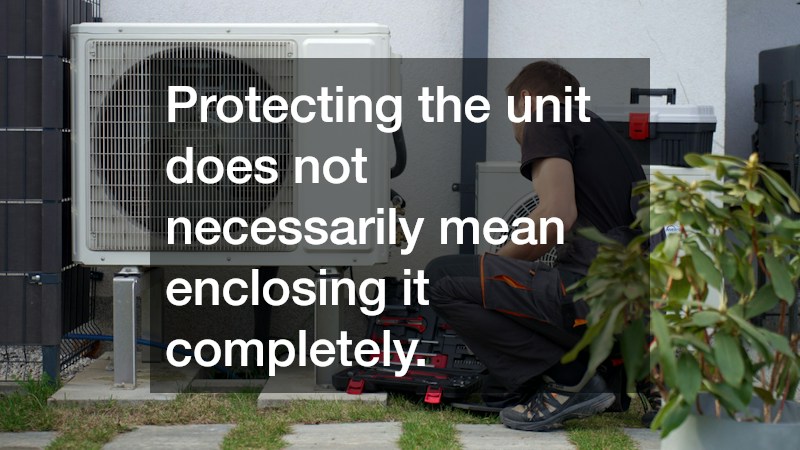
Protecting the unit does not necessarily mean enclosing it completely. Many modern outdoor condensers are designed to withstand normal winter conditions, and restricting airflow with an airtight covering can trap moisture inside. Excess moisture may encourage corrosion or create an environment where mold and mildew can develop. Instead, consult the manufacturer’s recommendations to determine whether a protective cover is appropriate for your particular model.
You should also keep snow from accumulating around the condenser during winter. If snow partially buries the unit, carefully clear the surrounding area without striking the cabinet or damaging the fins. Never chip away ice with sharp tools, and avoid placing heavy objects on the equipment. An HVAC contractor can explain the appropriate clearance requirements for your system and recommend additional precautions based on its location, installation, and exposure to severe weather.
Schedule Maintenance and Plan for Spring Startup
Winter preparation provides an opportunity to address performance concerns that may have developed during the cooling season. If your air conditioner struggled to maintain comfortable temperatures, made unusual noises, cycled on and off frequently, or caused unexpected increases in energy consumption, arrange an inspection before putting it away for the season. These symptoms may indicate airflow restrictions, electrical problems, refrigerant issues, or other conditions that deserve attention.
Professional maintenance can include checking electrical connections, evaluating operating components, inspecting the condensate drainage system, and reviewing the equipment’s general condition. A technician can also assess whether the thermostat and related controls are functioning properly. Addressing identified problems before winter helps prevent existing issues from being overlooked until the first hot day of the following year, when service appointments may be more difficult to schedule.
Preparing your AC for winter does not require complicated procedures, but consistent attention to cleaning, weather protection, and maintenance can make a meaningful difference. By addressing seasonal concerns before temperatures fall and planning ahead for spring, homeowners can help preserve their equipment and reduce the likelihood of avoidable problems when cooling is needed again.